Systems Engineering · Development Assurance

Expertise

My work spans the development-assurance lifecycle — from the strategy and certification planning that set a programme up, through systems development, integration and supplier management, to troubleshooting and root-cause analysis once a product is in service. The through-line is a plan you can execute to, and evidence that accrues as you go rather than being reconstructed under deadline pressure.

See the case studies for more information.

Development Assurance Strategy, Planning & Organisation
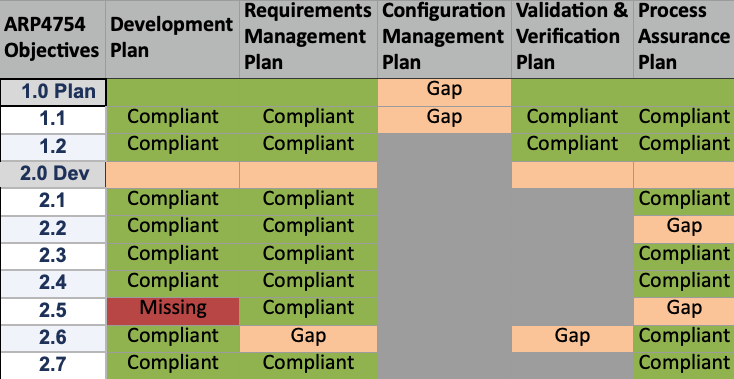
Matrix tracing ARP4754 objectives across the Development Plan, Requirements Management Plan, Configuration Management Plan, Validation and Verification Plan, and Process Assurance Plan

Development assurance strategising is a high-leverage activity. Use it to tailor your organisational architecture and development planning, then reap the rewards in risk burn-down, early error detection and the absence of surprises late in the programme. Done well, the assurance regime is designed deliberately against ARP4754 objectives rather than inherited as a stack of templates — and the organisation itself is treated as part of the system being engineered, with its interfaces, ownership boundaries and failure modes made explicit. The payoff is a plan you can actually execute to, and evidence that accrues as you go instead of being reconstructed under deadline pressure.
Certification Strategy & Authority Engagement

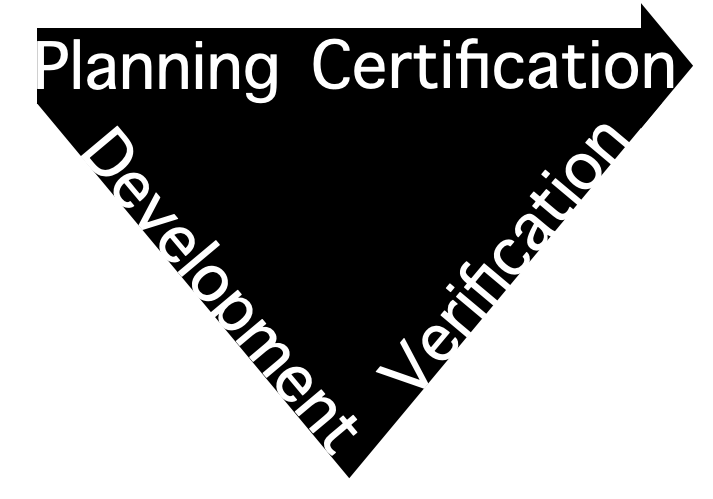
Inverted triangle with Planning and Certification across the top, and Development and Verification along the sides

Certification is won in the planning, not demonstrated at the end. I build the compliance argument from the outset — mapping the means of compliance, the planning and compliance-demonstration documents, and the evidence trail back to the applicable basis (FAA/EASA Part 23, 25 & 33). Authority engagement is handled as a working relationship: early alignment on approach, credible planning documents, and audit readiness that holds up because the underlying discipline is real. The aim is no surprises for the applicant or the authority.

Systems Development & Integration

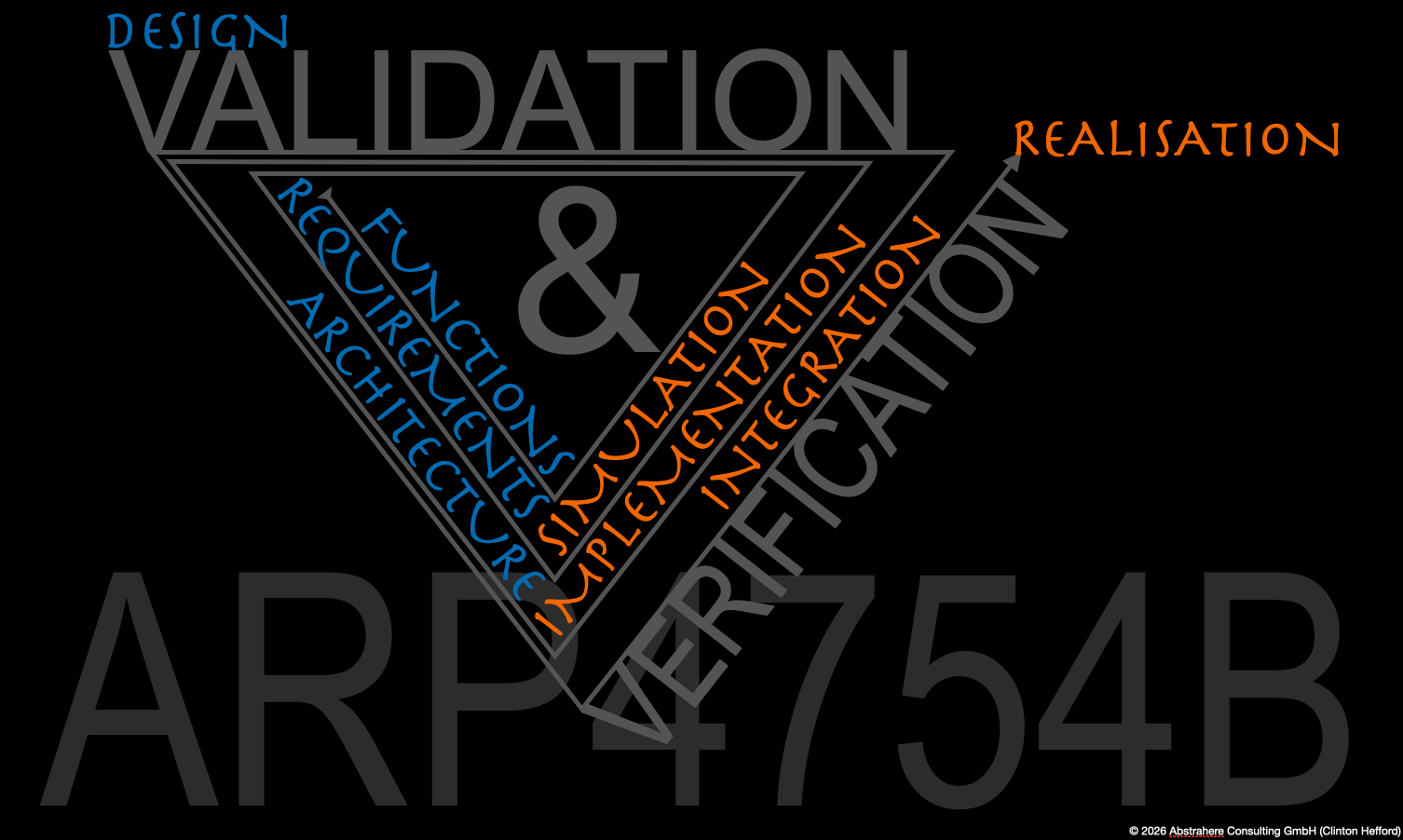
ARP4754B V-model: Design side runs Requirements, Architecture and Functions through Validation; Realisation side runs Simulation, Implementation and Integration through Verification

Full-lifecycle systems engineering, from function and architecture definition, trade studies, requirements capture, integration and V&V — ensuring robust traceability across all of these elements.

From in-depth planning through hands-on integration and test, coordinating across safety, security, design, avionics, electrical, flight test and production.

My track record spans control systems with mechanical, electrical, pneumatic and hydraulic elements; no matter the label put on the system, my focus is on the required functionality, the architecture, and ensuring assurance obligations are reconciled early, not fought over late.

Supplier Management / Customer Liaison

Two engineering teams in a video call, both sides with hardware and drawings on the table, reviewing a supplier programme together

Every programme’s success rests on customer-supplier relations, and the same principles govern both interfaces. I have worked both sides of this divide — as the embedded supplier and as the OEM-side focal — and seen first-hand how much a successful relationship depends on mutual respect and openness. It starts with alignment on the objectives, then proceeds with a clear-eyed, blame-free approach to the work: challenge to deliver, but stay flexible and offer support, with the end goal always in mind.

Project Management & Cross-Functional Coordination

A cross-functional team around a hangar table, reviewing CAD and system diagrams together in front of the aircraft

I operate comfortably as a programme-level focal, connecting multidisciplinary teams in pursuit of a shared goal. From bid support to planning and resource forecasting to the day-to-day coordination that keeps distributed teams pointed at the same milestones. The style is authority through clarity rather than hierarchy — making the plan, the interfaces and the trade-offs legible enough that people align because the reasoning is sound.

Troubleshooting & Root Cause Analysis

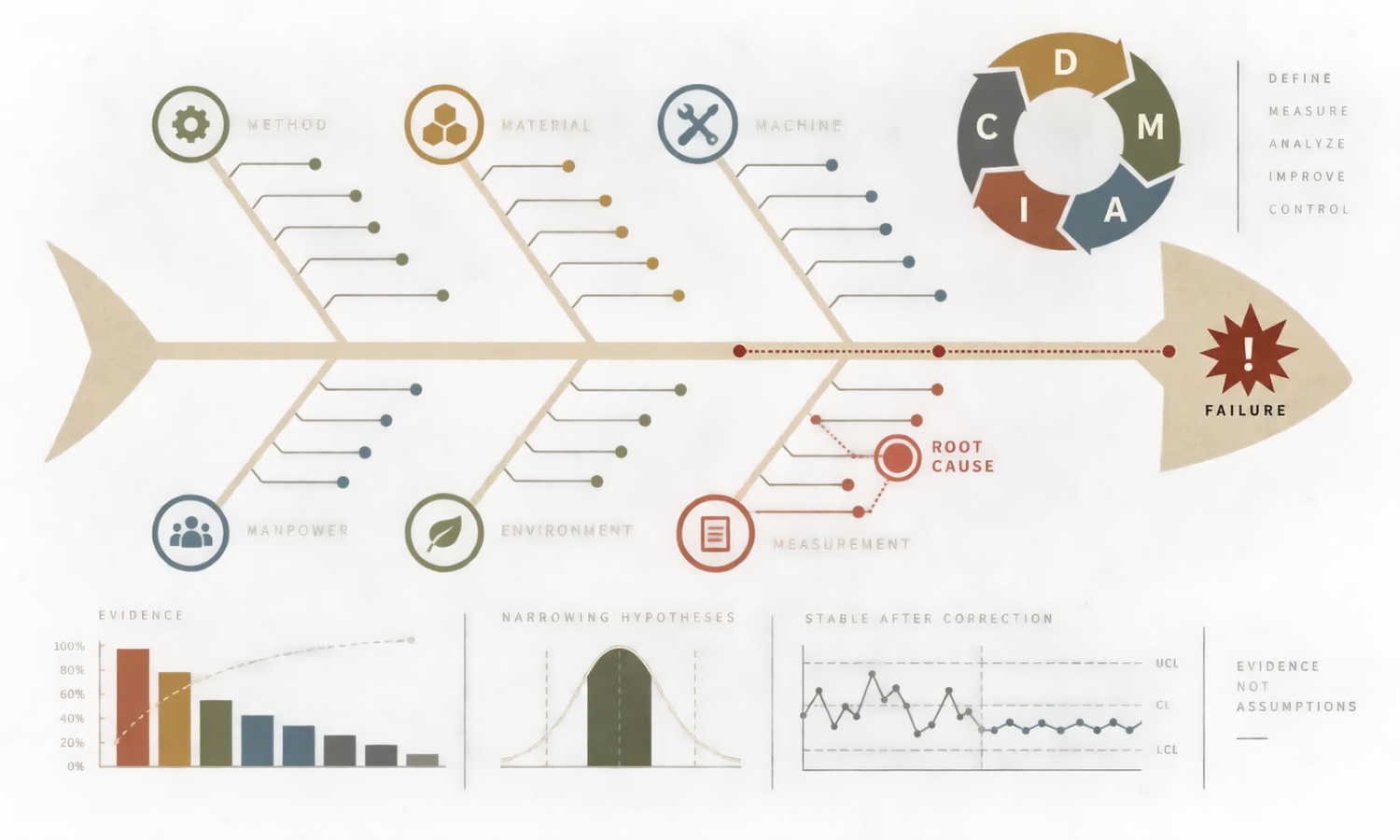
Fishbone diagram tracing Method, Material, Machine, Manpower, Environment and Measurement to a root cause and failure, alongside a DMAIC cycle and evidence charts: Pareto, narrowing hypotheses, and a control chart stable after correction

When systems misbehave in service, I run structured, evidence-based investigations and avoid jumping to early conclusions — Root Cause Analysis and Six Sigma methods applied from symptom to design-change approval and fleet rollout across production and retrofit.